
Zengtao Chen, University of Alberta
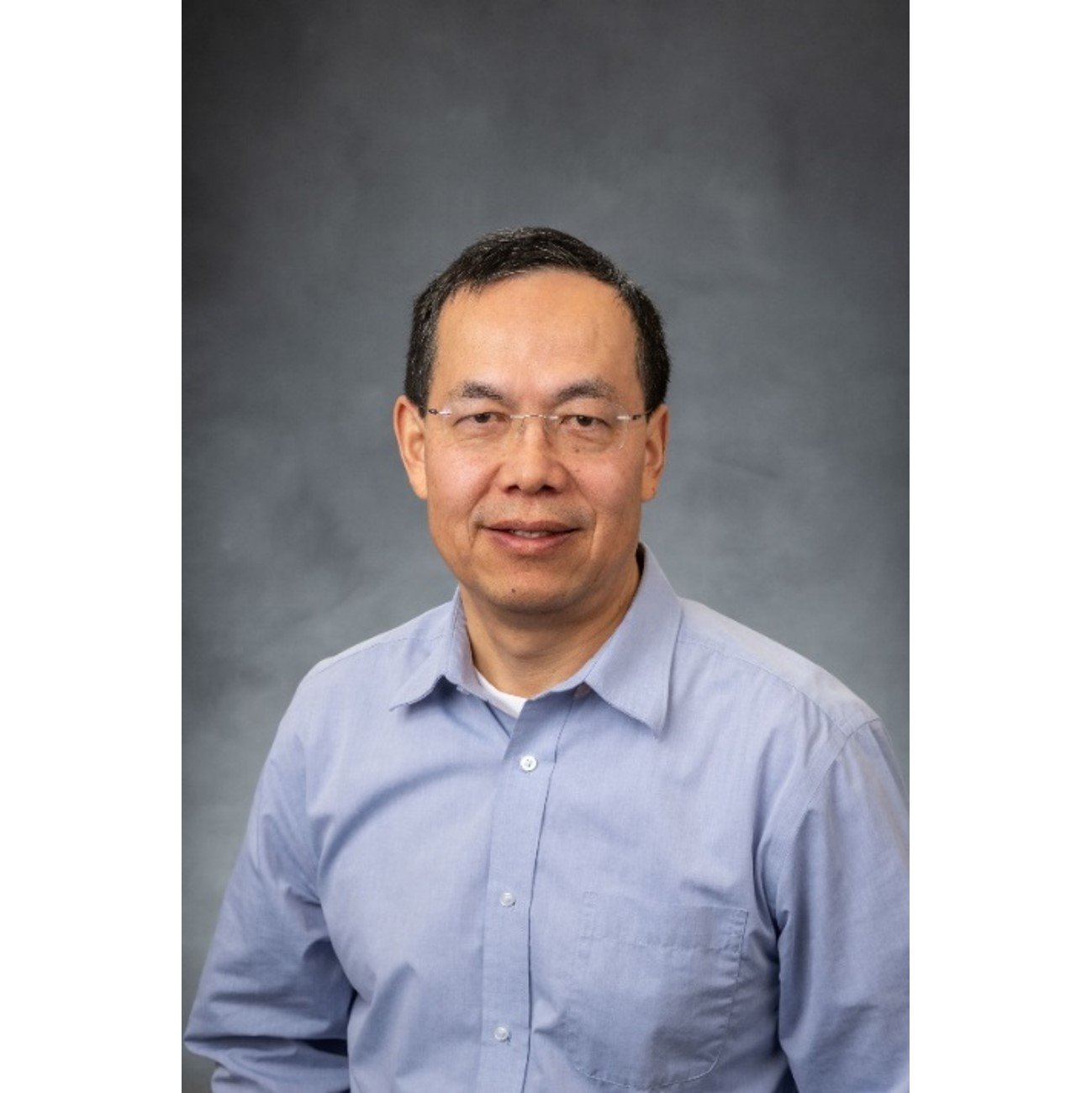
Biography
Dr. Zengtao Chen is a Full Professor in the Department of Mechanical Engineering at the University of Alberta. He holds a PhD in Solid Mechanics from the Harbin Institute of Technology (1995) and a second PhD in Mechanical Engineering from the University of Waterloo (2004). Before joining the University of Alberta, he held faculty positions at the Harbin Institute of Technology, Tsinghua University, and the University of New Brunswick.
His primary research interests include the multiscale modeling of deformation and damage in metals, advanced thermal stress analysis of smart materials and structures, and composite structures. A prolific mentor, Dr. Chen has supervised over 80 graduate students and postdoctoral fellows, many of whom have gone on to become academics at leading institutions globally.
Dr. Chen has authored more than 300 journal papers and three books, alongside numerous conference papers, and has delivered over 150 keynote and invited speeches worldwide. He currently serves on the editorial boards of nine international journals and chairs the CSME Materials Technology Committee. Over the course of his career, he has earned several prestigious honors, including the Teaching Excellence Award and the University Research Scholar Award from the University of New Brunswick, and the Frank Spragins Technical Award from APEGA.
Dr. Chen is a registered Professional Engineer in Alberta and is an elected Fellow of the Canadian Academy of Engineering (CAE), the American Society of Mechanical Engineers (ASME), and the Canadian Society for Mechanical Engineering (CSME).
Title: Deformation and Fracture of Advanced Materials: From Multiphysical Responses to Microstructure-Based Prediction
Abstract
In modern industry, advanced materials are increasingly subjected to complex loading conditions across multiple length scales—from the extreme temperature gradients of laser-based manufacturing to the coupled multiphysical demands placed on multifunctional systems. This talk summarizes our research into the fundamental mechanisms governing these materials, specifically focusing on two primary areas: (1) the multiphysical behavior of multifunctional materials under extreme conditions, and (2) the deformation and ductile fracture of metallic materials.
The first part of this work investigates the multi-field response of smart materials and structures, including piezoelectric materials, carbon nanotubes, and thin films. By analyzing their behavior under various physical disturbances, we provide critical insights for the design of reliable multifunctional devices that can resist premature service failure. The second part presents microstructure-based numerical simulations of ductile fracture in advanced metals, such as lightweight aluminum alloys and advanced high-strength steels (AHSS). This modeling framework quantifies how specific microstructural features influence deformation behavior during manufacturing. Validated against experimental data, these simulations demonstrate high effectiveness in predicting material formability. Ultimately, this research offers material designers and suppliers a robust framework for optimizing microstructures to enhance the performance and reliability of next-generation advanced alloys.