
J.M. Floryan, University of Western Ontario
Biography
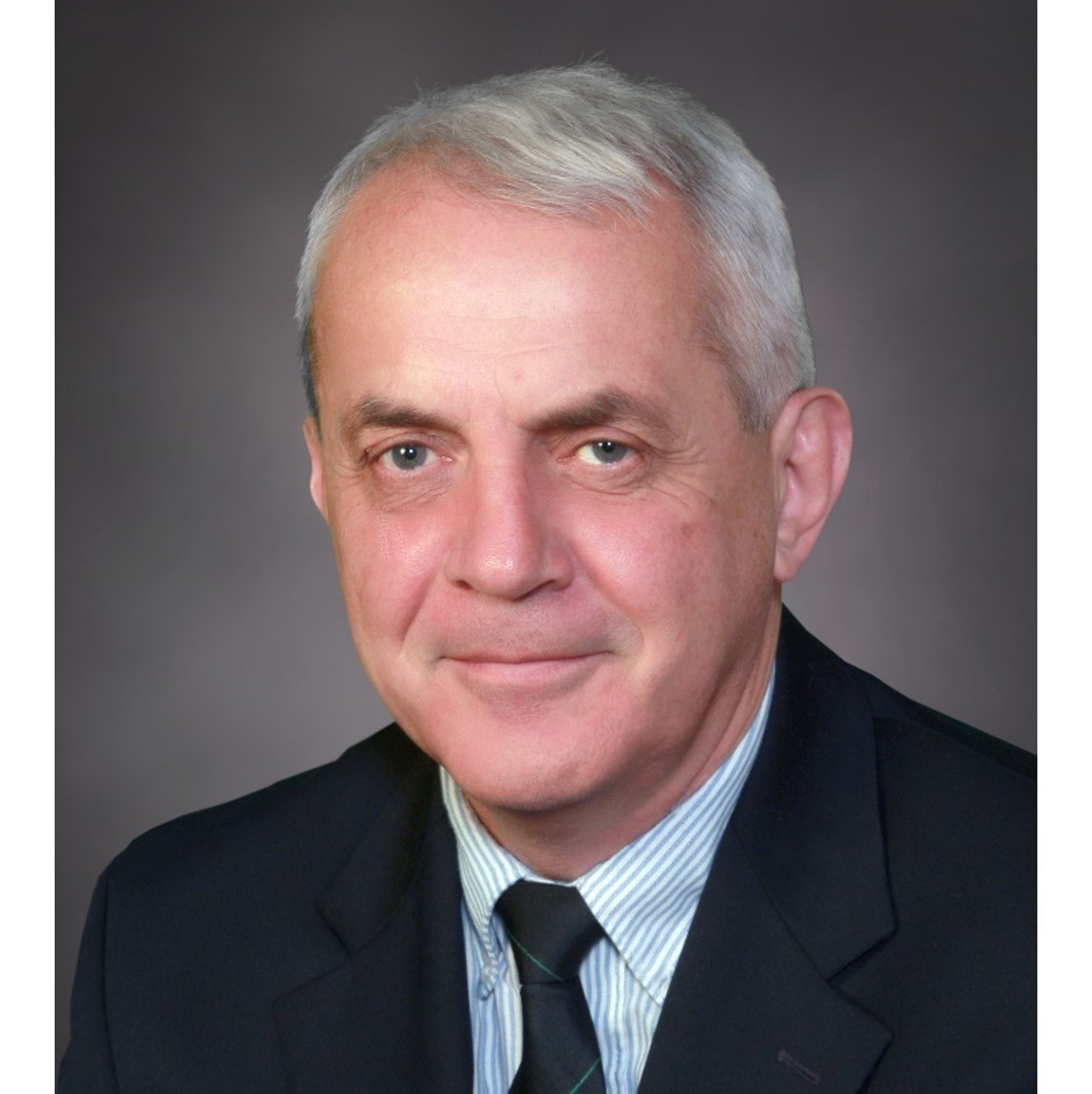
J.M. Floryan is a Western University, London, Ontario, Canada professor. He received his Ph.D. in 1980 from Virginia Tech and did postdoctoral work in 1981 at Northwestern University. He was a visiting professor at the City University of Hong Kong, Stuttgart University, Darmstadt Technical University, National University of Singapore, and Beijing Institute of Technology. He was a visiting researcher at DLR Gottingen, National Aerospace Laboratory Tokyo, CERT-ONERA in Toulouse, and Los Alamos National Laboratory. Dr. Floryan’s primary professional interests are in developing flow management strategies relying on passive and active actuation patterns (roughness, suction, heating, and vibration patterns). He served as President of the Canadian Society for Mechanical Engineering (CSME), the Canadian Congress of Applied Mechanics (CANCAM) and the International Congress of Theoretical and Applied Mechanics (ICTAM 2016). Dr. Floryan is a Fellow of the American Physical Society (APS), the American Society of Mechanical Engineers (ASME), the Canadian Society for Mechanical Engineering (CSME), the Canadian Aerospace and Space Institute (CASI), the Engineering Institute of Canada (EIC), and the Japanese Society for the Promotion of Science (JSPS), as well as being a NATO Research Fellow (France) and a Science and Technology Agency Fellow (Japan). He was the winner of the Robert W. Angus Medal (CSME), the Canadian Pacific Railway Engineering Medal (EIC), the McCurdy Award (CASI), the Humboldt Research Prize (Germany), Erskine Fellow (New Zealand), Lady Davis Fellow (Technion), Stachiewicz Medal (CSME) and John B. Stirling Medal (EIC). He is the Canadian representative to IUTAM and chair on the Canadian Committee for Applied Mechanics.
Title: Electrical Effects on Liquid Droplets
Abstract
It is desired in the production of sprays to find ways to control the size and distribution of liquid droplets. It is also interesting to provide means for directing the spray towards the target of interest. Both these goals can be addressed using electric fields, e.g., electrostatic spraying/painting. These techniques' proper design and efficiency rely on understanding the fundamental aspects of droplet dynamics when exposed to external electric fields, especially on understanding the processes associated with droplet breakup. This presentation focuses on the dynamics of liquid droplets driven by the induced polarization effect and includes experiments and theory. Droplets were isolated from all other effects during experiments using a microgravity environment. The evolution of droplets was captured using a high-speed movie camera. Theoretical analysis, which involved numerical simulation of the deforming droplet, was able to reproduce various stages of the deformation process in time up to the formation of Taylor cones. The droplet evolution process can be divided into rapid distortion followed by a combination of capillary instability and formation of Taylor cones, and mass removal from the zone of the cones. Rapid distortion theory was proposed to describe droplet evolution in the Taylor-cone regime. A good agreement between the experiment and theoretical modeling has been observed.