
Anke Lindner, University Paris Cité
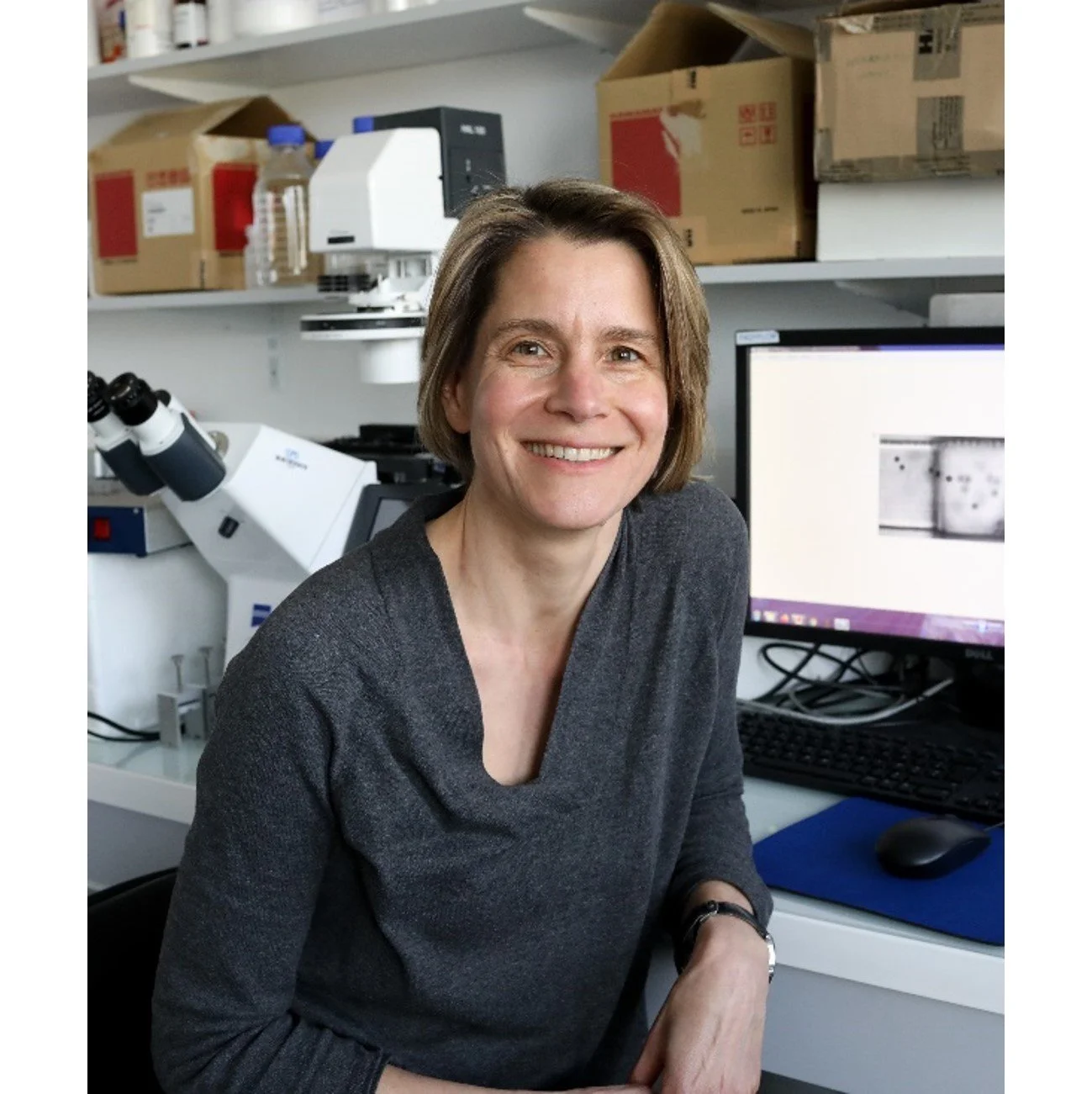
Biography
Anke Lindner joined the physics department of University Paris Cité (UP) in 2013 and holds a full professor position there. Her research group is part of the PMMH lab at the Ecole Supérieure de Physique et Chimie (ESPCI), Paris. She obtained her PhD from the Ecole Normale Supérieure, Paris in 2000 and her Habilitation from the University Pierre et Marie Curie (UPMC), Paris in 2010. She has worked as a consultant at McKinsey and Company, in Zurich, Switzerland and as a Post-Doctoral fellow at ESPCI. Prior to her appointment at UP she held an assistant professor position at UPMC. Her research topics can best be summarized as “flow of complex fluids” and cover a broad range of topics from rheology of granular or active suspensions and more recently fluid structure interactions, microfluidics and elastic flow instabilities. She has recently been awarded an ERC consolidator grant and became a fellow of the APS-DFD in November 2019 and of the American Society of Rheology in 2025. She is the Maurice Couette award winner of the French Society of Rheology 2019 and received the silver medal of the CNRS in 2021. She became a member of the Institut Universitaire de France in 2024.
Title: How E Coli Bacteria Navigate Flow and Complex Environments
Abstract
Active fluids consist of self-propelled particles (such as bacteria or artificial microswimmers) and display properties that differ strongly from their passive counterparts. Unique physical phenomena, such as enhanced Brownian diffusivity, viscosity reduction, active transport and mixing, or the extraction of work from chaotic motion, result from particle activity, which locally injects energy into the system. The presence of living and cooperative species may also induce collective motion and organization at the mesoscopic or macroscopic level, impacting constitutive relationships in semi-dilute or dense regimes. Individual bacteria transported in viscous flows exhibit complex interactions with flows and bounding surfaces, arising from their activity and complex shape. Understanding these transport dynamics is crucial, as they impact soil contamination, transport in biological conduits or catheters, and thus constitute a serious health threat.
Here, we investigate the transport of individual E. coli bacteria under flow and in complex environments, using microfluidic model systems in combination with a novel Lagrangian 3D tracking method. By combining experimental observations and modelling, we elucidate the origin of upstream swimming, lateral drift, persistent transport along edges, as well as bacterial self-focusing. At increasing bacterial concentrations, collective motion emerges, and we characterize the resulting vortex-like structures using PIV. We discuss how the characteristic length scales can be controlled through bounding walls or flows. The understanding gained can, for example, be used to control bacterial transport in complex geometries or to shed light on the role of emergent mesoscopic structures in determining the macroscopic properties of active suspensions.